Origin of Ethiopian Opals
Ethiopian opals are among the most captivating gemstones on Earth, known for their vibrant play-of-color and energetic presence.
⚡ Quick Answer
Ethiopian opal is a hydrated, hydrophane form of silica, most of it mined in the Welo region of Ethiopia and prized for a vivid play-of-color. In the crystal community it is linked to creativity, emotion, and hope, and to the root, sacral, and solar plexus chakras. Because it is hydrophane it absorbs water and can temporarily change color or craze, so keep it away from water and oils. Scroll down for its meaning, care, and how to use it.
These precious opals are a hydrated amorphous form of silica, often showcasing body colors that range from warm yellows and oranges to fiery reds. Some stones appear white or even completely clear, but all share one signature trait: a mesmerizing iridescence that sets them apart from common opals.
Physical Properties of Ethiopian Opals
What makes Ethiopian opals especially unique is their hydrophane quality—they readily absorb water. This means their appearance can temporarily change when wet, and for longevity, it's best to keep them dry.
How to Care for Ethiopian Opal
Because Ethiopian opal is a hydrophane stone, it readily absorbs water, oils, and other liquids, which can temporarily cloud its body color, mute its play-of-color, or in some cases cause it to craze (develop fine surface cracks). To keep an Ethiopian opal looking its best, keep it away from water, oils, perfumes, and lotions; remove opal jewelry before washing your hands, swimming, or applying cosmetics; and clean it only by wiping gently with a soft, dry cloth. If a stone does absorb water and turn cloudy, it will usually clear again once it dries out slowly.
Metaphysical Properties Of Opal
But their appeal isn’t just visual. Ethiopian opals are powerful energetic stones that stimulate the auric field and help activate and align all chakras. Their warm body tones make them particularly attuned to the root, sacral, and solar plexus chakras—the foundational energy centers tied to passion, confidence, and creativity.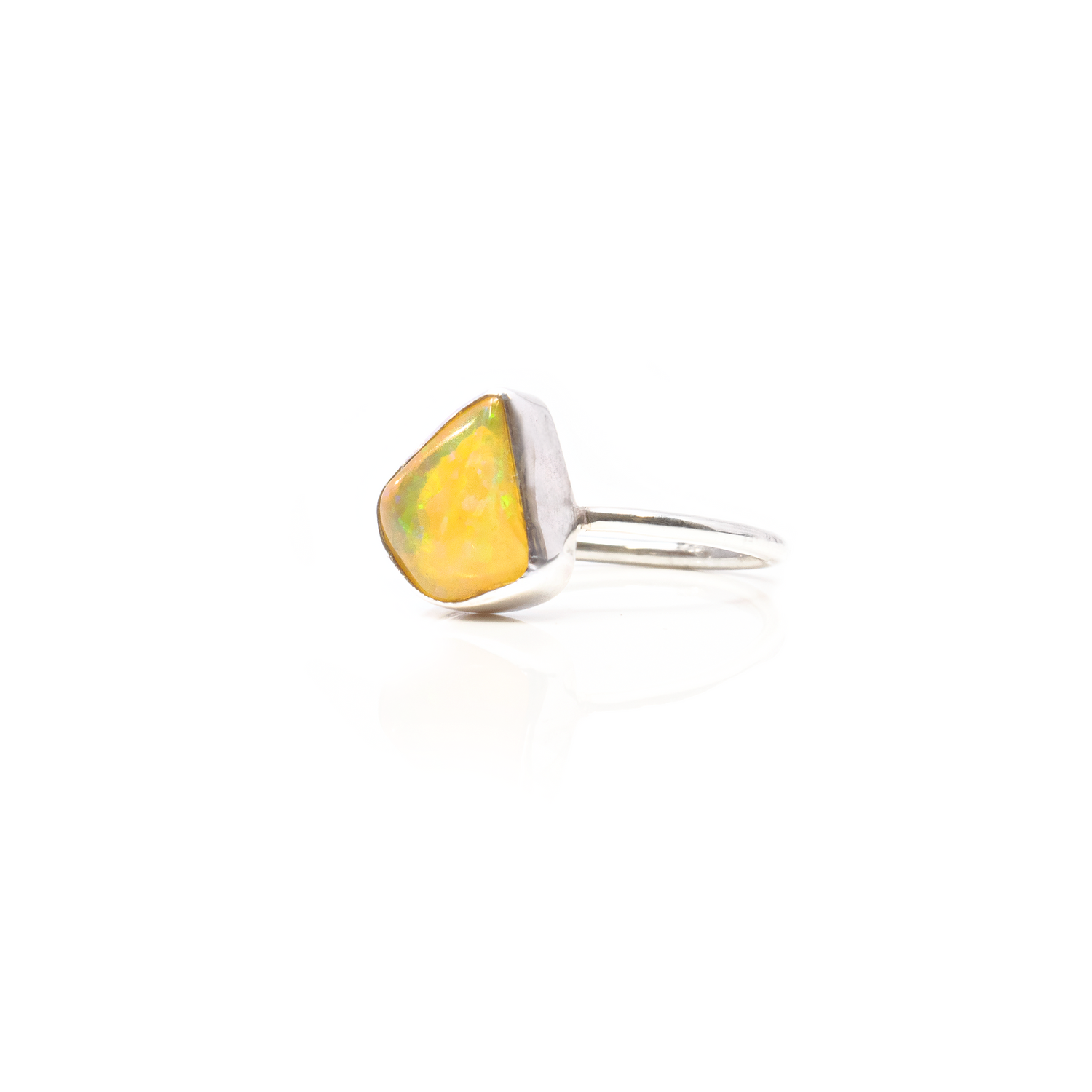
Whether you're drawn to their shifting colors or their metaphysical potential, Ethiopian opals are ideal for anyone looking to awaken their inner fire. They’re said to inspire courage, optimism, and joyful self-expression, while gently dissolving fears and inhibitions.
For those ready to step into a more vibrant, confident version of themselves, Ethiopian opals offer more than beauty—they offer transformation.
Crystal healing practices may be used as a complementary part of your personal wellness journey. They are not intended to replace medical advice, diagnosis or treatment from a qualified healthcare professional. Always consult an appropriate healthcare provider regarding any medical condition or health concern.
If Ethiopian opal’s play-of-color fascinates you, you may also enjoy our guides to Labradorite, Moonstone, and Zultanite. If you have seen opalite and wondered whether it is a kind of opal, our guide explains the difference between opal and opalite.
Since 2013, Rare Earth Gallery has been Arizona's most celebrated destination for natural art. Our award-winning Cave Creek gallery is home to tens of thousands of hand-selected crystals, minerals, meteorites, fossils, onyx sculptures, gemstone jewelry, and natural stone fountains — each piece chosen because nothing quite like it exists anywhere else. Visit the gallery or shop our website.